LAST CHANCE SALE: Up to 40% Off Select Items. Shop Now >
We all check our weather apps but almost none of us scroll down to check the UV Index, and unless you or someone in your family has asthma, you probably don’t pay attention to the Air Quality Index either.
Yet those color-coded scores affect your outdoor plans whether you notice them or not. The good news? Understanding what these numbers mean lets you plan your day more effectively. And with proper shade, planning becomes even easier.
Here’s what the colors indicate, their importance, and how smart shade keeps you better protected outdoors.
The UV Index, Broken Down
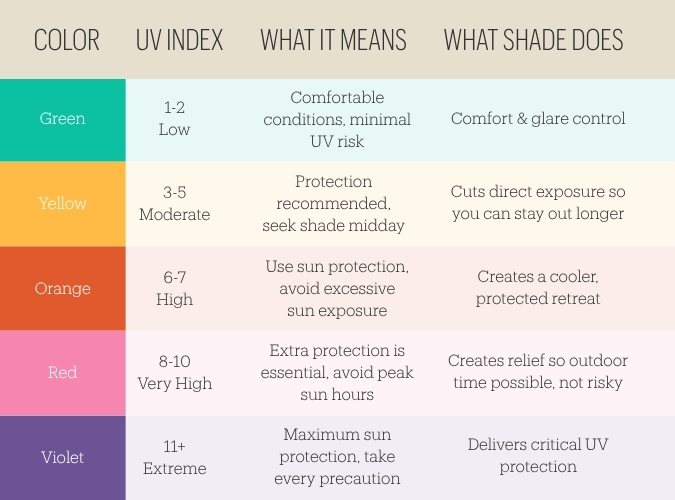
The UV Index is a 1 to 11+ scale created by the EPA and the National Weather Service that predicts how strong the sun's ultraviolet radiation will be at a specific location. The higher the number on the UV Index, the more quickly and intensely your skin, eyes, and outdoor surfaces are affected.
Here's what the colors mean:
Your shadow is the easiest read in the wild.
The Air Quality Index, and Why "Orange Days" Are a Thing
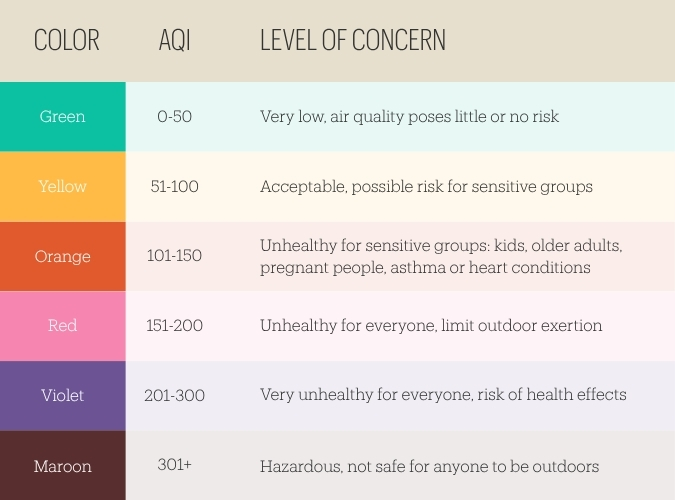
The Air Quality Index (AQI) is the EPA's tool for measuring how clean the air is on any given day, tracking pollutants like ground-level ozone and fine particulate matter. Like the UV Index, it's color-coded for different levels of health concerns:
Why ozone triggers so many orange alerts
Did you know, ground-level ozone forms when vehicle exhaust and other emissions react with heat and sunlight, which is why orange days spike on hot, sunny summer afternoons and ease up in the mornings and evenings.
So a "code orange" day isn't a signal to lock the doors. It's a signal to be intentional. Take the outdoor time in the cooler parts of the day. Move the afternoon jog to the morning or evening. And if you're going to be out, have a shaded spot where you can settle in and take a breath.
The SPF Parallel (Sort Of)
We hear this question a lot: "Is shade fabric like sunscreen?"
Not exactly, but the comparison helps:
Here's where the comparison starts to make sense:
Coolaroo shade fabric blocks up to 95% of harmful UV rays, creating a layer of protection over patios, pool decks, play areas, gardens, and outdoor living spaces.
Sunscreen protects skin. Shade protects everything under the sun: your kids while they play, your pet on the deck, your outdoor furniture, your grill area, your patio floor. It doesn't wear off, sweat off, or wash off. It's the layer that keeps working even when you forget the SPF 50.
The Right Shade Fabric Changes the Forecast
Coolaroo shade fabric:
Translation: on a yellow, orange, or red UV day, your shaded space still feels usable.
The Bottom Line
In our warming world, weather conditions will fluctuate and become more intense. Some days will be green. Some orange. Some may even surprise you.
While shade can't change the forecast, it provides a dependable place to relax or have fun outdoors. And that's the whole point: more enjoyable days outside with fewer worries.